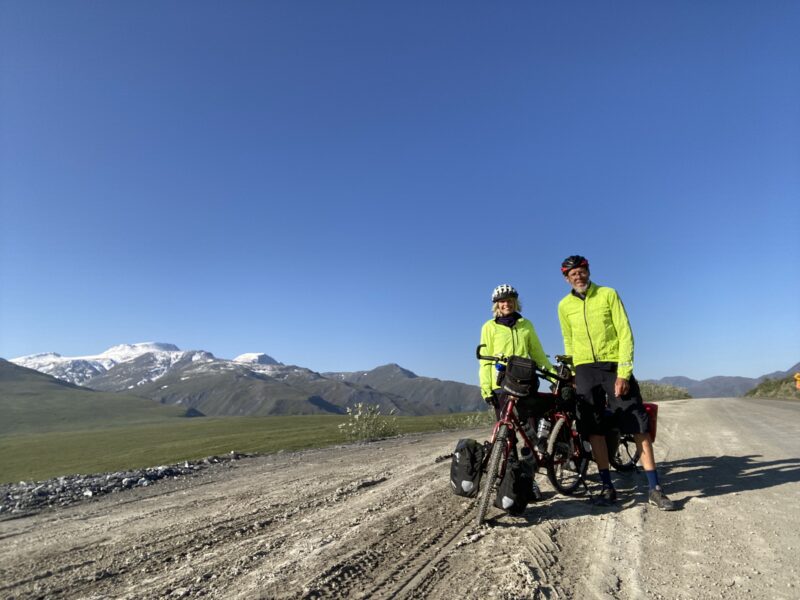
Cycling from Seattle to Deadhorse at the top of Alaska was always going to be a challenge –
especially for two ‘older’ cyclists like Tim and myself. As we packed our bikes into cardboard boxes I
felt a sense of de-ja-Vue. Were we really putting ourselves through this again? Three months of
camping, freezing cold and boiling hot temperatures and a diet of noodles!
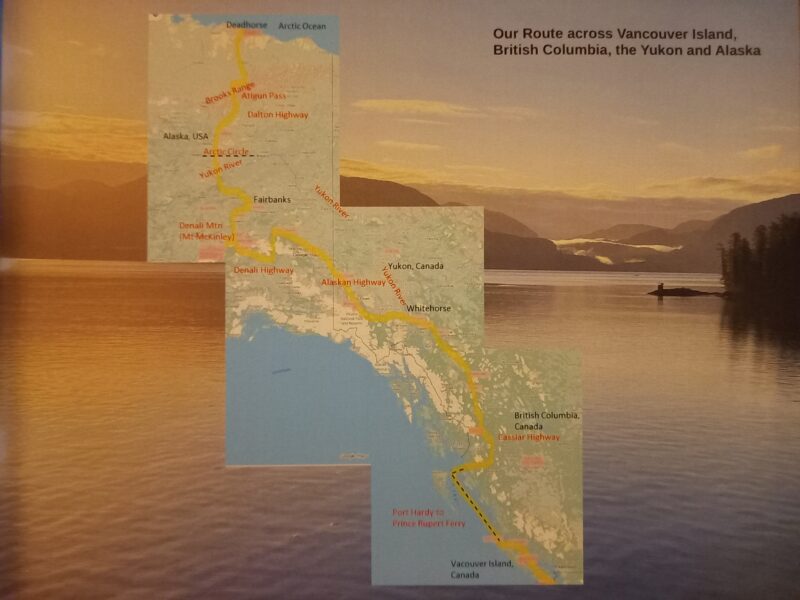
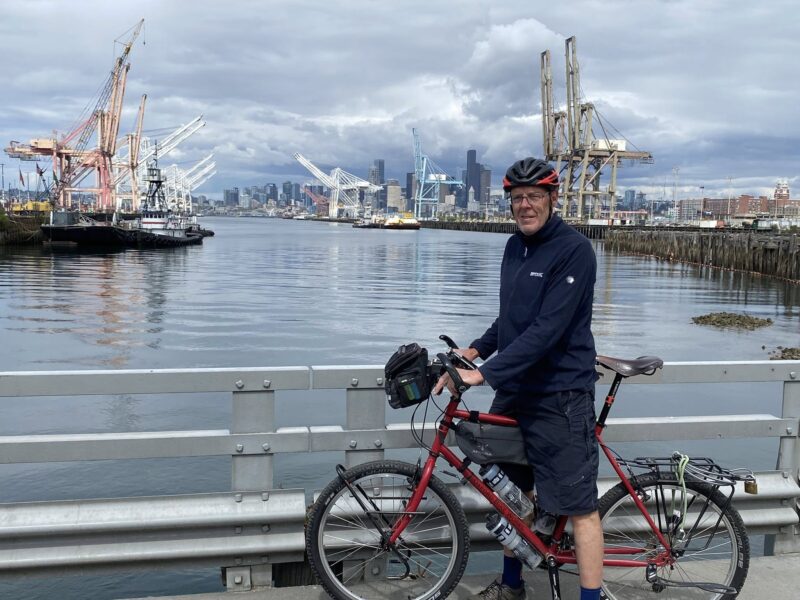
We arrived in Seattle and had a couple of days to put the bikes together, gather supplies such as
bear spray, mosquito spray and gas cylinders. Then we were off – on a speedy ferry to Vancouver
Island. Always on these trips, the weight of the bike is a shock. As we plod along, the bike so heavy
it’s hard to push on the flat let alone up the hills, but my spirits rise. I love this, just letting the track
dictate our speed and watching the world go by (literally).
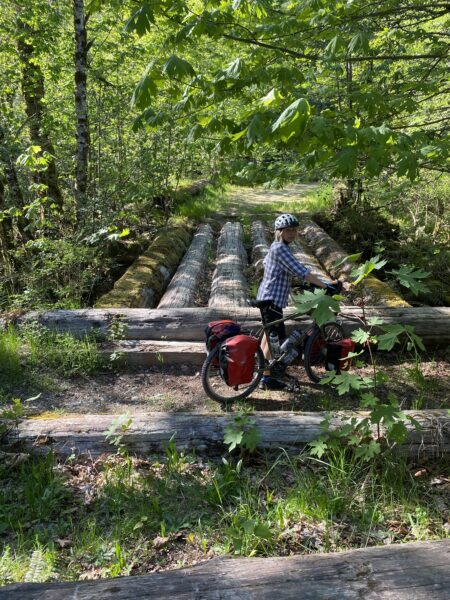
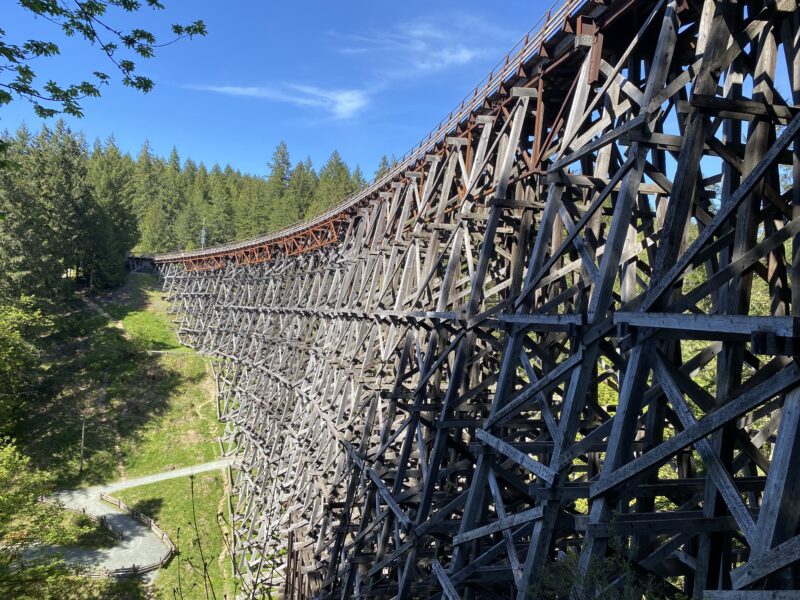
We were on a cycle track to start with and it crossed huge wooden Trestle railway bridges. Some
were 12 storeys high and great to cycle over. Soon we were seeing signs warning of cougars and
bears. We had been used to cycling in bear country on the Continental Divide (Mexico to Banff
Canada) but you cannot afford to be complacent. It’s difficult when you are tired and just want to
crawl in the tent to remember to be so careful. We cook and store our food well away from where
we sleep, sometimes using bear bags hung high in trees. It’s so serious that forgetting one mint
humbug, left in a pocket worn in the tent, can result in death. Sometimes, when it felt safe to do so,
we left food in the panniers on the bikes. Not always a good idea which I’ll explain later.
For now we are enjoying Vancouver Island. It’s not too hot or cold (rain at times) and scenery is
trees – in every direction. Suddenly we come to a closed bridge. As cyclists you’ll know there’s not a
lot you can do about a closed bridge so we called on the help of a dog walker. He explained a very
convoluted and difficult way around to get back on the track the other side. This involved climbing
over railway sleepers, walking along overgrown single tracks and worst of all, climbing down a really
steep bank back onto the track. I videoed Tim inching his way down and slipping, falling on his bum
with his bike on top of him. I couldn’t help laughing as he growled at me but he got the last laugh as
somehow I’d not turned the video on.
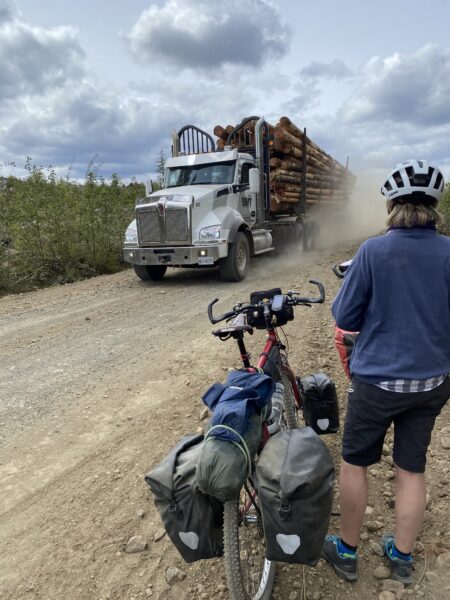
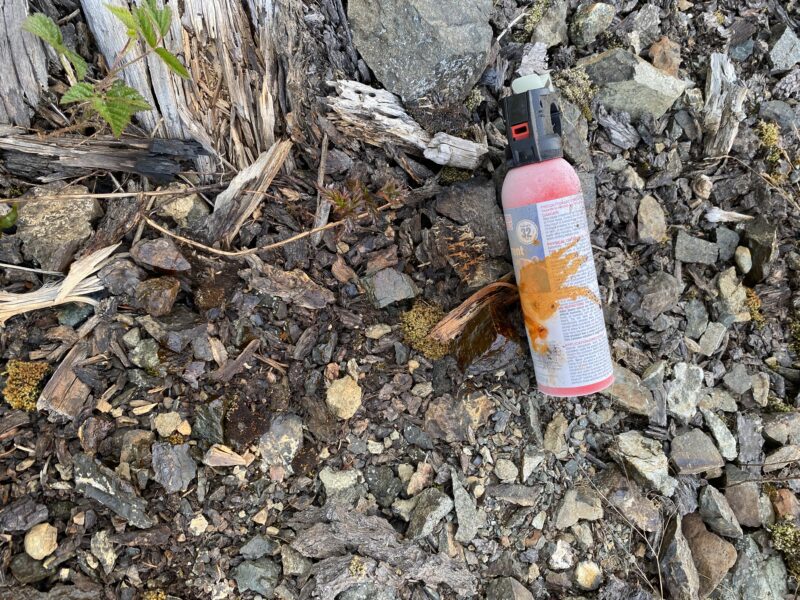
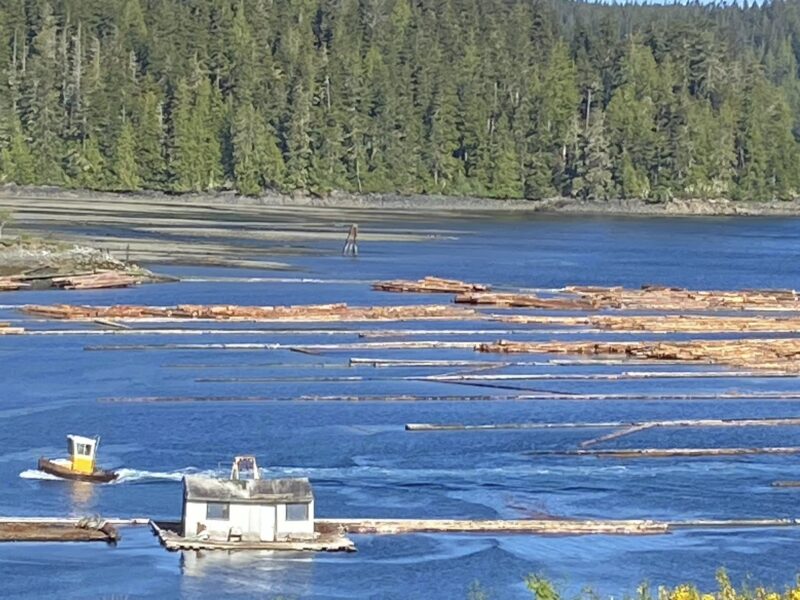
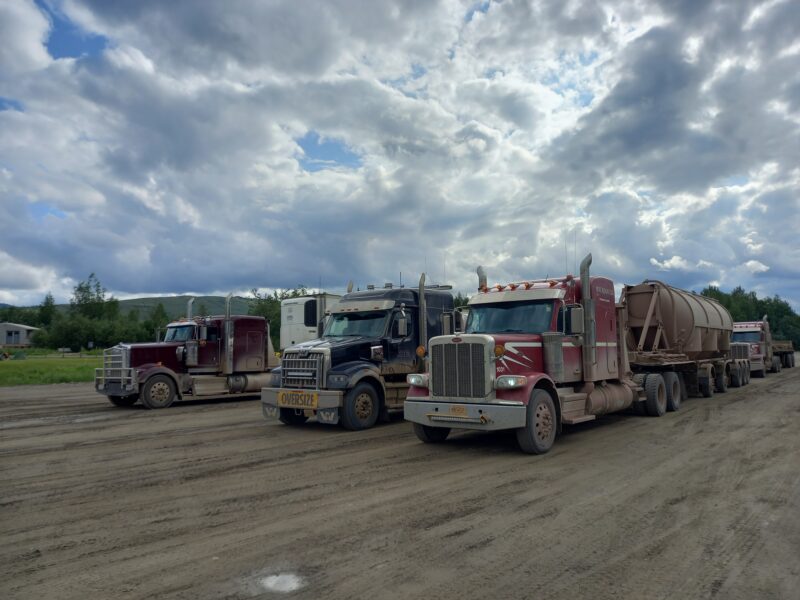
Through most of the Island, we were on logging trails. These were out of bounds and we crept along
very stealthily. The Lorries were gigantic carrying dozens of tree trunks and kicking up dust so we
couldn’t see in front of our noses. One afternoon we were stopped by a car and told we weren’t
allowed on these roads. We asked if there was a way round and told “no” – stalemate until I looked
so forlorn she let us continue. We found a hidden spot to camp amongst trees where the ground
was very uneven. Unfortunately I tripped and dropped by bear spray which pierced releasing a
cloud of chili pepper. I felt it on my leg and screamed. Tim shouted ‘run’ and I did but the wind blew
the spray his way and he spent a night with eyes streaming – he said it felt like someone had rubbed
chopped chilly in his eyes. I felt guilty but he got his own back which you’ll read about later!
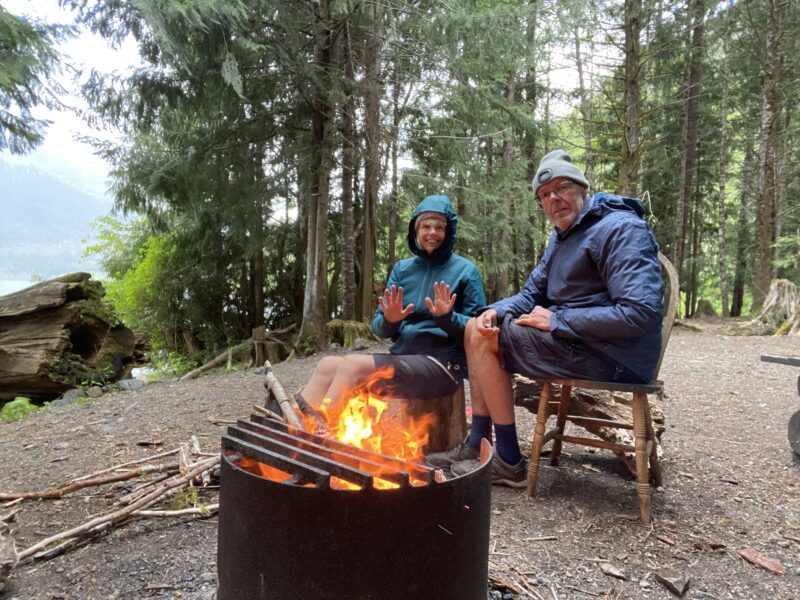
The scenery was less trees now and beautiful lakes. We made fires because of the evening cold and
to help with the flies and midges. We were getting used to our diet of peanut butter on tacos for
lunch and noodles with smash potato for dinner. We could never be tempted to eat more because
our food was tucked away well before dark. Actually there was very little dark – only a couple of
hours. It was bizarre going to bed at 10pm in bright light and waking at 5 still in bright light. This
extended to 24 hour sunlight once we were in Alaska.
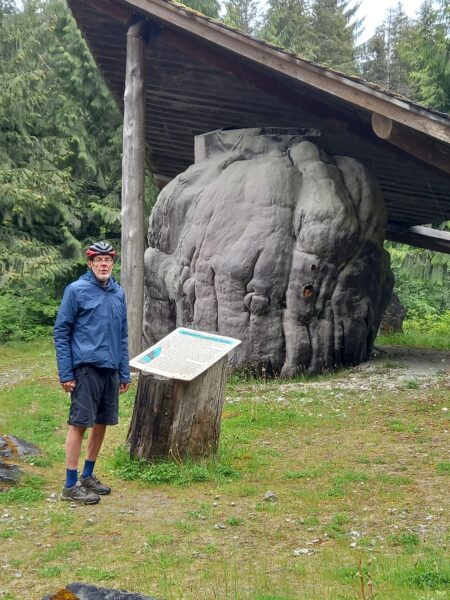
Getting to Port Hardy early for the ferry to Prince Rupert we had a mini holiday on Malcolm Island. A
very pretty place with a lovely café. We also saw the world’s largest Burl (an abnormal swelling of a
tree trunk or branch caused by disease). It weighed 22 tons and was 6ft tall and 45ft across.
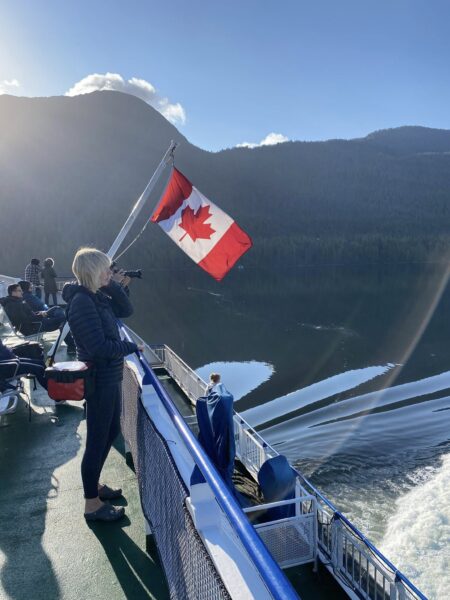
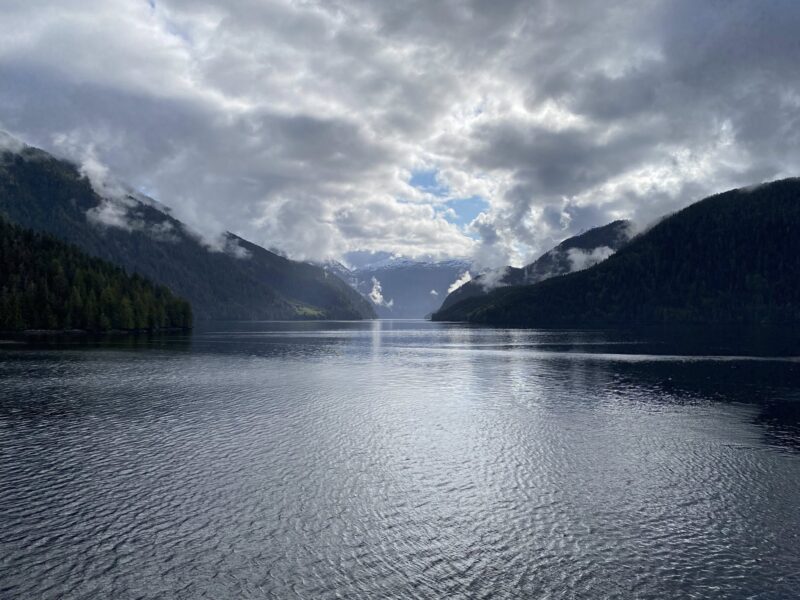
Eventually we were on the ferry. All our kit was soaking wet from the rain so we amused other
passengers by holding the tent high above our heads at the back of the ferry to dry. A number of
people asked for our photo!! Our small cabin looked like a jumble sale with wet clothes strewn
everywhere and after getting seasick I was ready to be on solid ground, back on my bike, for the next
stage of our adventure.
The roads were pretty good in British Columbia and after waving off our newly made ferry friends,
we began peddling toward the Cassiar Highway. I was nervous of this road as I’d heard there were
bears around every corner and hardly anywhere to resupply but Tim had done his usual great job of
spending hours finding every place possible where we could get food and camp. I felt like I was in
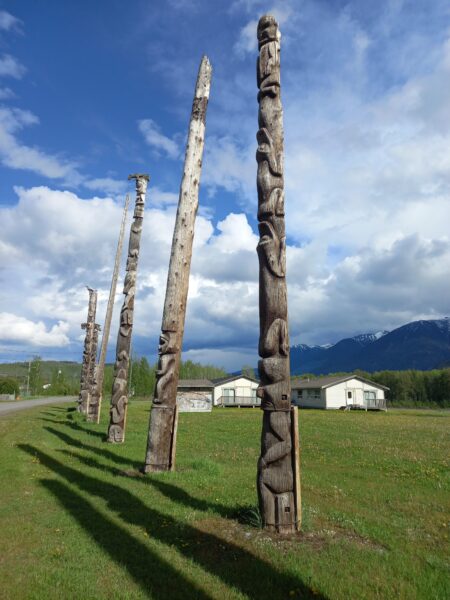
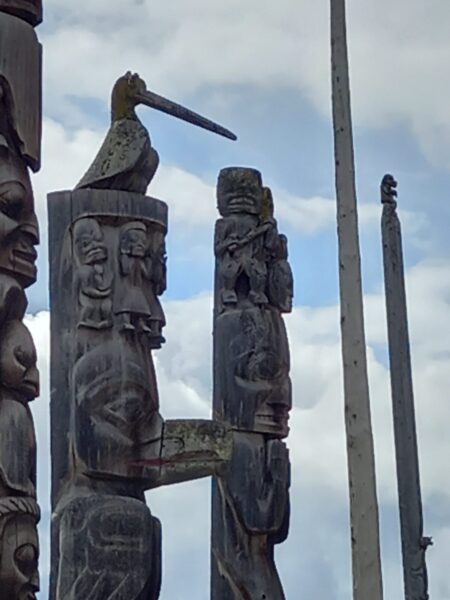
some kind of film set when we came across our first Totem Poles. They were fabulous, made of
Cedar and represent the owner’s clan status and inherited family traditions. We met a lovely lady
who was visiting her Grandfather’s totem poles and explained that she felt a pull to visit every year
to remember her roots.
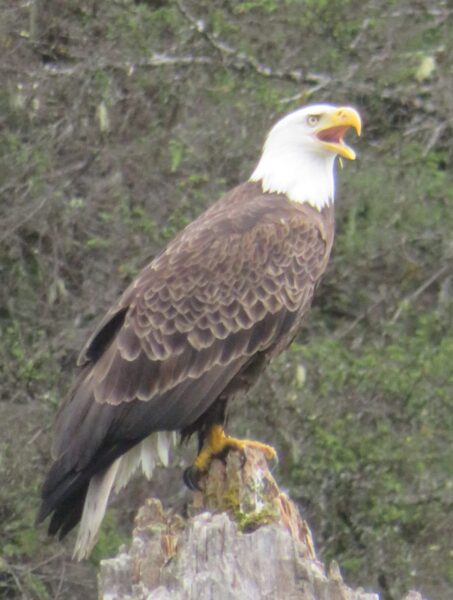
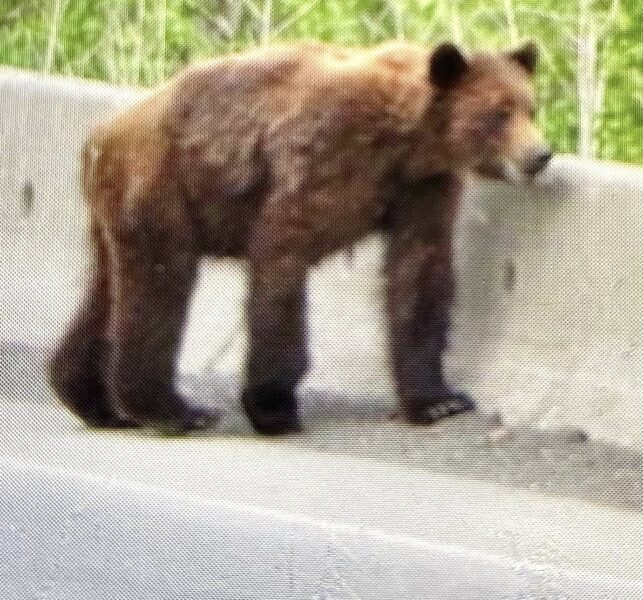
I had asked Tim if we could visit Stewart which was a detour off the Cassiar Highway. We camped at
the top of the road leading down to this remote town and heard there were many Grizzly bears in
the area. The wardens at the camp asked us to put our tent up next to their trailer so we could
knock on their door if one came visiting in the night. We put up the tent and went to a gas station
about half a mile away. On our way back we were lucky enough to see 4 grizzly bears. Two large
ones and two smaller ones.
The road to Stewart was very remote passing Bear Glacier and the town itself was like going back in
time to the Wild West. The roofs of the houses were very long and angled so the snow in the winter
would be easier to remove. At the campsite we heard there was a black bear around but we should
be ok if we made sure no food was inside the tent. On the ride back we saw a black bear cub – not
knowing where its mum was, we left the area sharpish (well as sharpish as you can on a fully loaded
bike).
On returning in freezing cold rain and hailstones to the top of the road, we found we weren’t
allowed to camp there anymore as the grizzly family were still visiting the camping area. We were
forced to stay in a worker’s camp which meant sleeping in a converted ship container. It was very
basic but warm and with a shower so we were full of joy. There was also a canteen the workers
used so we enjoyed our first proper meal in a while.
In the morning I was waiting for Tim when another big brown grizzly wondered past about 50m
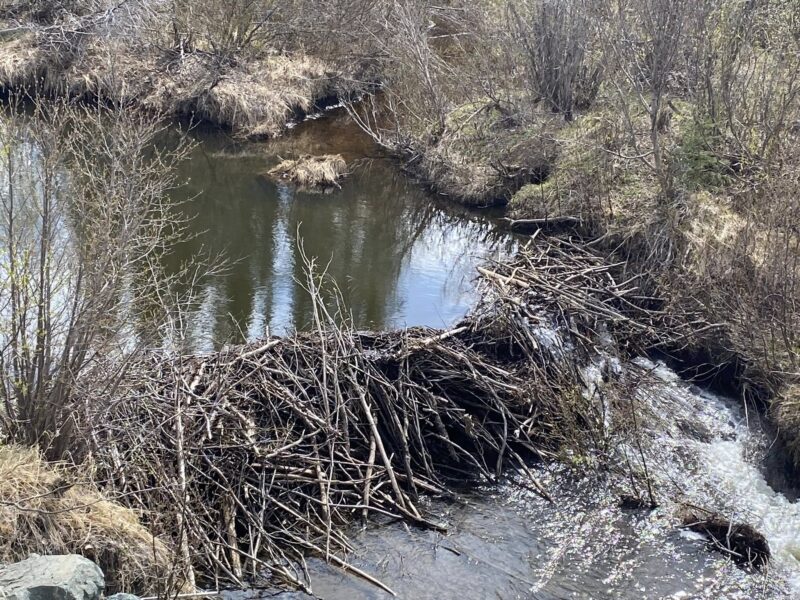
away from me. It was incredible. The rest of the Cassair Highway passed without incident. We saw
many Beaver Dams, porcupines an enormous frozen lake, a shop selling ammunition next to bread
and passed over Gnat Pass Summit. There was one First Nations Café which was so nice we ate our
way through the menu. Homemade soup and huge burgers hit the spot nicely thank you very much.
Tim nodded off over his second coffee much to the amusement of other customers.
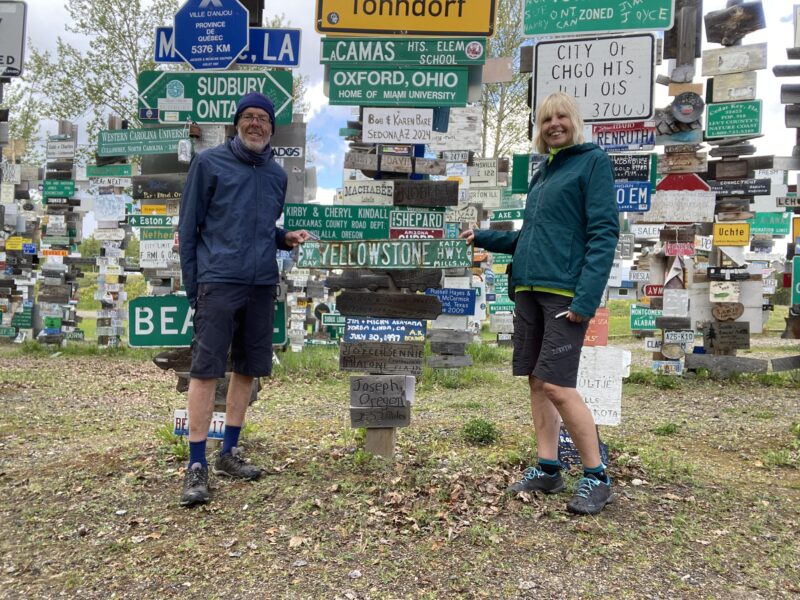
We had now left the Cassair Highway and joined the Alaskan Highway. We did a slight detour to
Watson Lake to visit the Signpost Forest. It’s difficult to explain how big this place has become. In
1942 a soldier working on building the Alaskan Highway was feeling homesick and so put up a
signpost pointing to his home town. Other homesick soldiers followed suit and from that day
thousands have added to what’s become a massive forest of signposts. We had found a Yellowstone
signpost by the road a couple of days earlier and had carried it so we could add it to the forest.
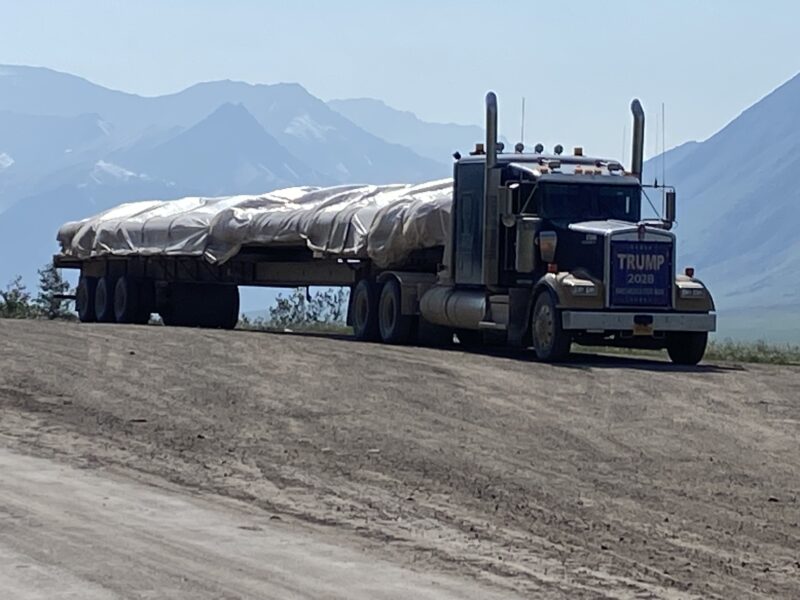
The Alaskan Highway was a wide, well surfaced road and I expected it to be busy with cars but it was
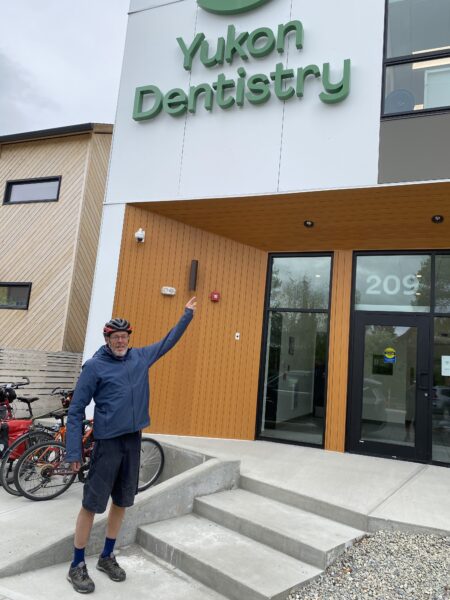
still very remote. We could make good time on such a road which was needed because Tim began to develop a nasty tooth infection. It got to the stage where he was unable to put his teeth together
without wincing in pain. We decided to go as many miles as possible each day to make it to
Whitehorse where we knew there would be a dentist. This meant riding 80 plus miles for a few
days which was exhausting, especially when we had a strong headwind. However we made it and as
soon as we entered the town we headed for the Yukon Dentistry. They were great and Tim saw a
dentist that afternoon who confirmed it was an infection. I had some antibiotics on me that Tim had
been taking and luckily we were told that had been the right thing to do. We treated ourselves to a
bed for two nights and one evening went to the tiny cinema. We were watching the latest Mission
Impossible film and every seat was taken. Every time a ‘baddy’ was killed there were whoops of joy
and at the end everyone clapped in earnest. It really was a great atmosphere.
Back on the road, it was only a couple of days before we reached our next town, Haines Junction.
Here there was a folk festival taking place and we enjoyed an afternoon listening to music in a
fabulous bakery. This was becoming too much like a holiday! Some nights later it was a different
experience. We had been wild camping so decided to try our luck at a gas station which had signs up
for campers. There was no one around except a little man with a goaty beard and beady eyes in the
shop. Before I knew it I’d paid a really high price to camp and we regretted staying when we saw the
area of ground we were meant to put the tent up on. There was scrap metal and general scrapyard
rubbish everywhere. The place felt scary and dark even though the sun hadn’t gone down.
We put the tent up, double locked the bikes and went to bed. About two hours later I heard
someone chopping wood – what? Why was someone chopping wood at midnight? My hearing
became super sensitive as I listened intently. Then someone was standing to the right of the tent
playing a radio – it was a chat show but muffled. I was really scared and woke Tim up. He said it was
nothing and went straight back to sleep. The person was now on the left of the tent, in front of it,
behind it – he was playing games. This went on for a long time and I started to feel more angry than
scared until the man screamed ‘GO HOME’ a number of times.
Again I woke Tim and he was now sitting up alert. ‘JUST GO HOME YOU F…… IDIOTS’. We were the
only people in the campsite so I knew he must mean us. “What the hell” said Tim and started
crawling out of the tent in just underpants and T. shirt. I tried to keep him from going and was sure
he’d be killed but he asked the man what was going on and two dogs had come from his neighbour
(2.5km away) and killed one of his chickens. There was no apology and it was by far scarier than the
thought of bears and wolves being nearby.
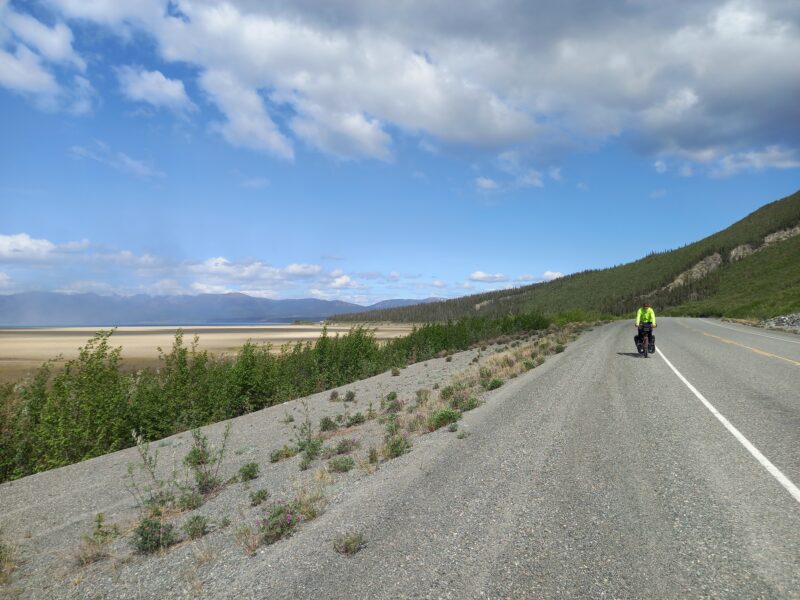
The scenery just got better and better as we made our way North. The snow-capped mountains
rose into the sky either side of the road and we were able to wild camp in rest areas with pit toilets.
I enjoyed talking to the truck drivers and locals who would stop to use the facilities. We saw many
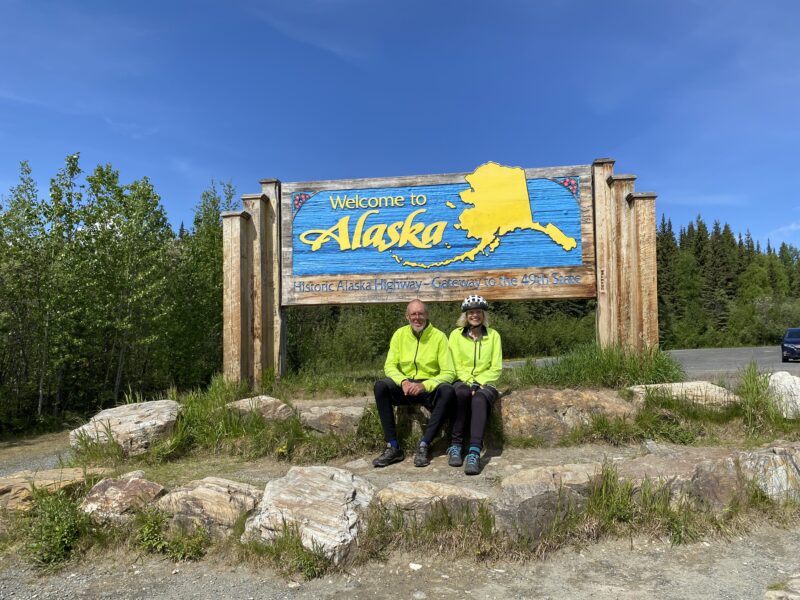
fabulous birds, plants and insects along the way and then suddenly we were at the Border going
back into the USA into Alaska. The international boundary between Canada and Alaska has a marker
which meant it was possible to stand in both countries at once. I was so excited to have reached
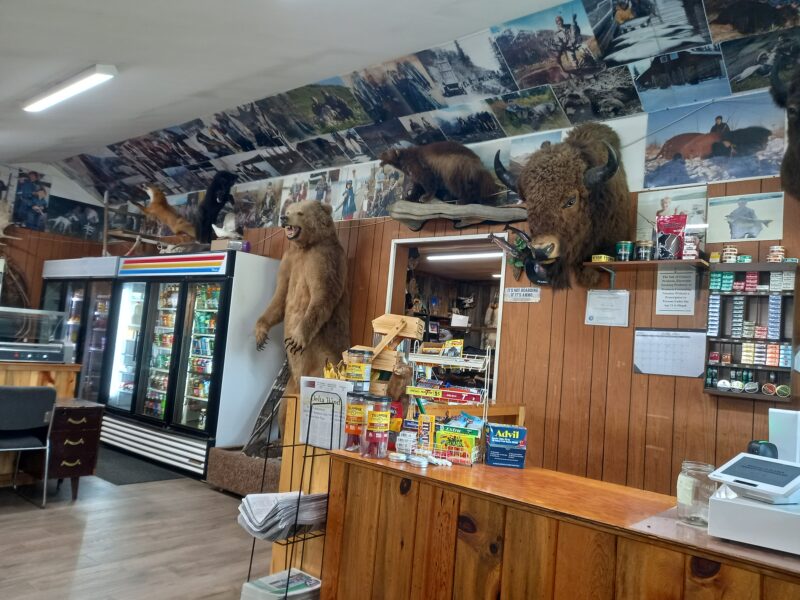
Alaska. I knew it was going to be somewhere special as soon as we visited a gas station and amongst
the junk food (all they seem to sell in Alaska) were stuffed Otters, a bear and a buffalo head. It was
so bizarre.
The Alaskan Highway ends in a town called Delta Junction. This was the first town we’d been to for a
few days so we were excited to restock at the supermarket. We found the campsite nestled in the
woods and because it was a proper campsite left our food in the panniers away from our tent. It
was around 5am that I heard a funny noise coming from the bikes. I quickly unzipped the tent and
saw a squirrel sitting on top of my pannier – on how sweet – a red squirrel I thought until it lifted its
head with a big piece of bread in its mouth. I’ve never got out of my sleeping bag so quickly but too late – the whole of the top of one of my back panniers had been ripped through by the squirrel.
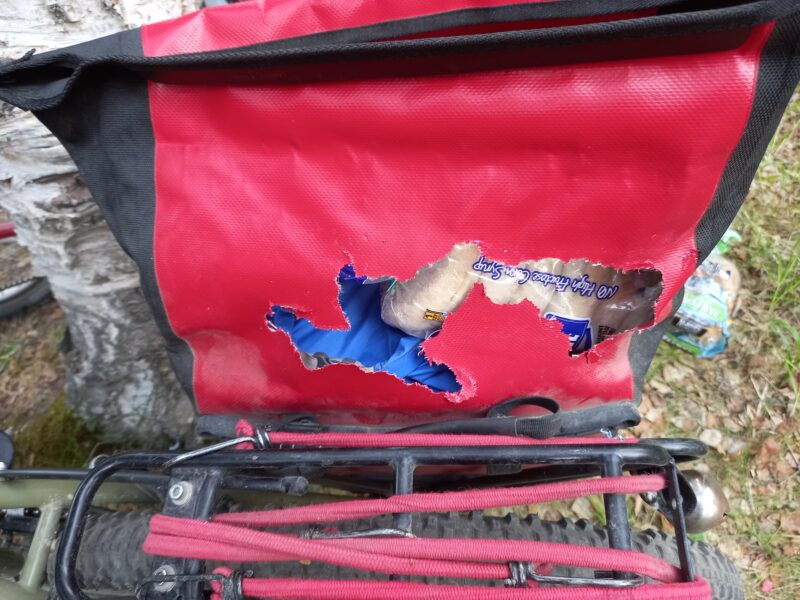
How stupid was I to leave bread near the top of it. This was bad news – our panniers needed to be
waterproof and in strong condition for the rest of the trip. We made our way to the supermarket,
aptly called the Three Bears and they had a camping section (mainly guns, ammunition and fishing
gear) and we found a red dry bag. I couldn’t believe our luck. We bought copious amounts of
superglue and set about cutting the dry bag to the right shape to cover the hole. On lookers were
amused at what we were doing but we were so proud of the result. A waterproof patch that barely
noticed. I was just so grateful this had happened in one of the few places where we were near a
supermarket.
The mosquitos were supposed to start getting worse from here. We were ready with our head nets
and knew that they were called the ‘national bird’ for a reason. We sprayed the tent with any
mosquito spray we’d carried from Seattle waited for the deluge of bugs.
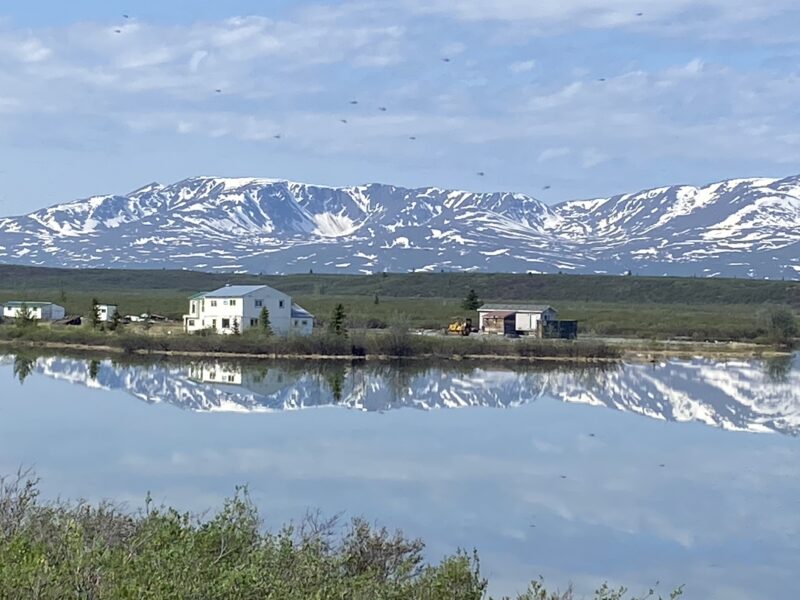
The next road Richardson Highway would take us to the Denali Highway and National Park. We were
excited for the next stage as it was renowned for its beauty and remoteness. We were not
disappointed – the scenery was on a par with that of Patagonia with beautiful reflections in clear
blue lakes and snow-capped mountains that stretched for miles. This area becomes completely
covered in snow for months at a time and then, the main mode of transport is sledding with husky
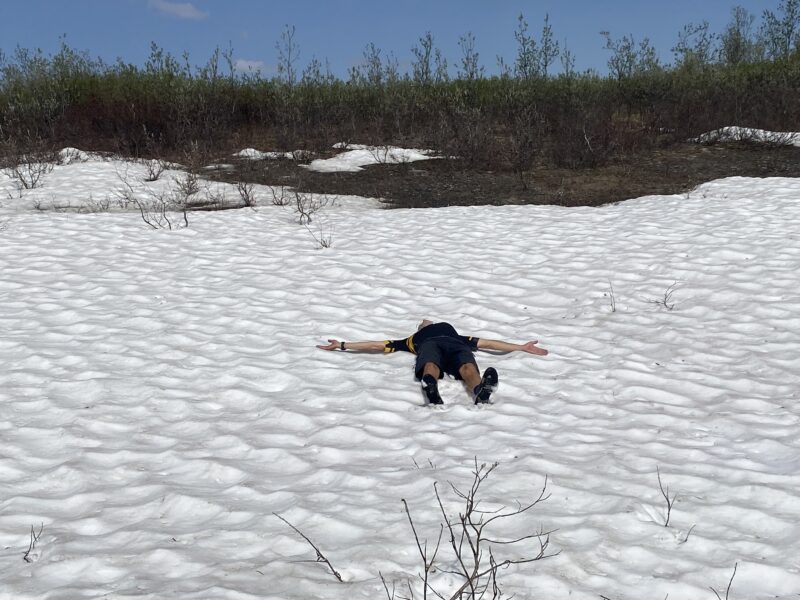
dogs. Whilst we were cycling it became very hot – often over 35. We had snow piled up on the side
of the road at times and Tim enjoyed cooling down by lying on it and melting ice into his helmet.
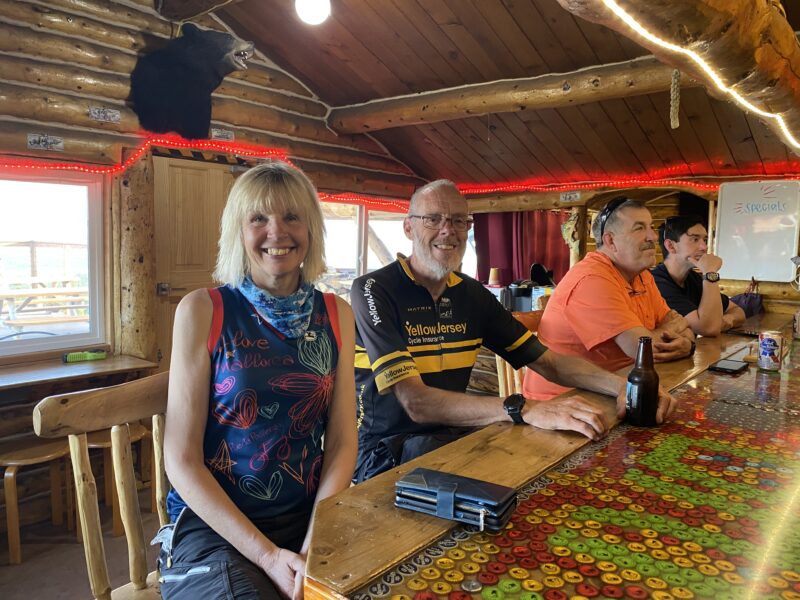
Along the Denali Highway were 3 lodges and they were all worth a visit. We could camp in the
grounds and drink beer and eat whilst watching the scenery. We met Bob, a barman who told us
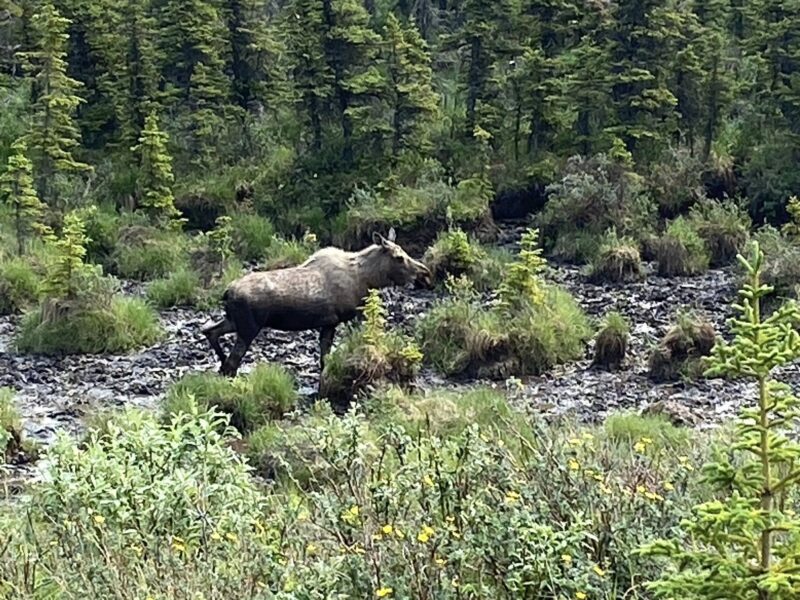
about his life in the winter and how one Moose could feed his family for a few months. I believed
this as, by now, we had seen a few Moose and they are extremely big animals. Locals are often
more afraid of Moose than bears because they will trample you if you get in their way. They don’t
have the chase instinct so you can run away (which you can’t with bears) but people have been
known to die putting their rubbish out because a Moose was on their driveway.
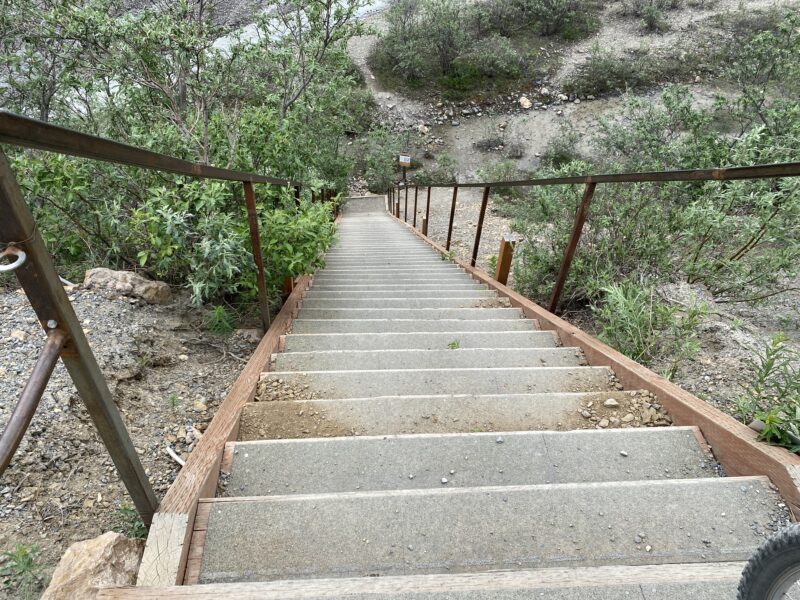
Denali National Park was a whole new ball game. There had been a catastrophic land slide which cut
off the road, going deeper into the park, to anyone with a vehicle. As cyclists we could take a steep
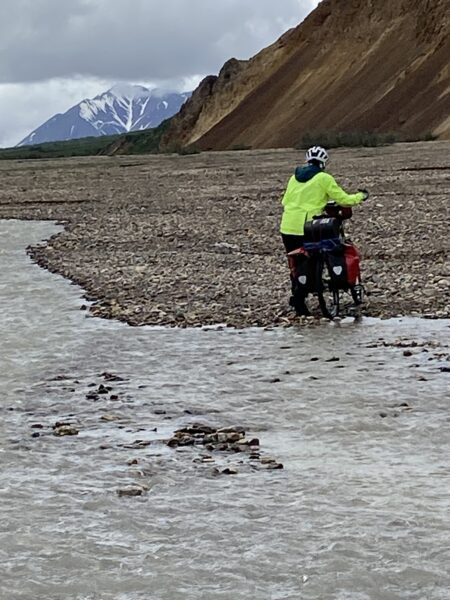
set of steps down to the river bed, walk the five miles around the landslide and reach the road on
the other side. This meant we would be truly alone. But first we had to get a Backcountry Permit
and watch 3 videos on bear safety before being allowed to venture into the park. We cycled for a
couple of days to reach the landslide and took the steps down (carrying our panniers separately).
The five miles involved wading across numerous streams – one of which was so deep and with such
a strong current it nearly took my bike. I held on for dear life but it pulled a muscle in my shoulder
which gave me pain for the rest of the trip. We were soaking wet by the time we pulled, pushed and
dragged our bikes back to the road. The new bridge which will be put over the land slip was
balancing high above us and looked like something out of a Lego kit.
Inside the park we found a place to camp and, knowing we were completely alone and there were
bears around, called out often ‘hello bear – we are here visiting – we’ll be gone soon’. We spent 3
days inside the park before retracing our steps back around the landslip and although it was a
wonderful experience, when we reached Denali Village we were very grateful for the food and drink
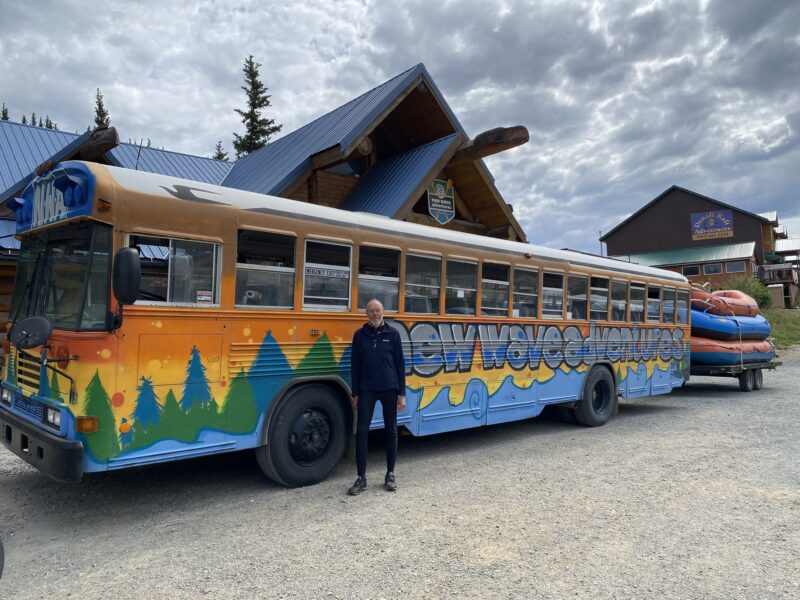
on offer. Tim did a white water rafting trip whilst I wondered round the village, drank tea and began
to feel like I belonged in a civilised place again. It was here we met two ladies who remembered us
from the Continental Divide. They told us they didn’t recognise us as such, but our bikes as they
were such an unusual choice for the Divide (most cyclists are on full suspension mountain bikes).
We spent a great evening chatting with them as they’d succeeded in cycling the infamous Dalton Highway (of BBC Most Dangerous Road programme and Ice Truckers). We were heading for this
road and I had so many questions. They really put my mind at ease and were also the only people we
had met who had successfully completed it.
We were heading North again towards Fairbanks where we would rest before the 500 mile Dalton
Highway. But first we had to get past numerous forest fires that meant having to take a lift in a
vehicle for around 8 miles. The whole area was black from the fire and the smoke was still visible.
We were lucky to get through as we heard the road had been closed for 3 days and was about to be
closed again for an indefinite time. When we cycled into Nenana – the town before Fairbanks, we
loved it so much we decided to stay a couple of days. The campsite was lovely and we met a Turkish
cyclist who had been on the road for 15 years. He warned us against going on the Dalton Highway
and had turned around at the Arctic Circle, but we were excited to try it so didn’t listen.
Here we went to the bar where locals could be found and Tim got chatting to a man who had written
a book on coincidences and mathematical probabilities or some such thing. Anyway we ended up
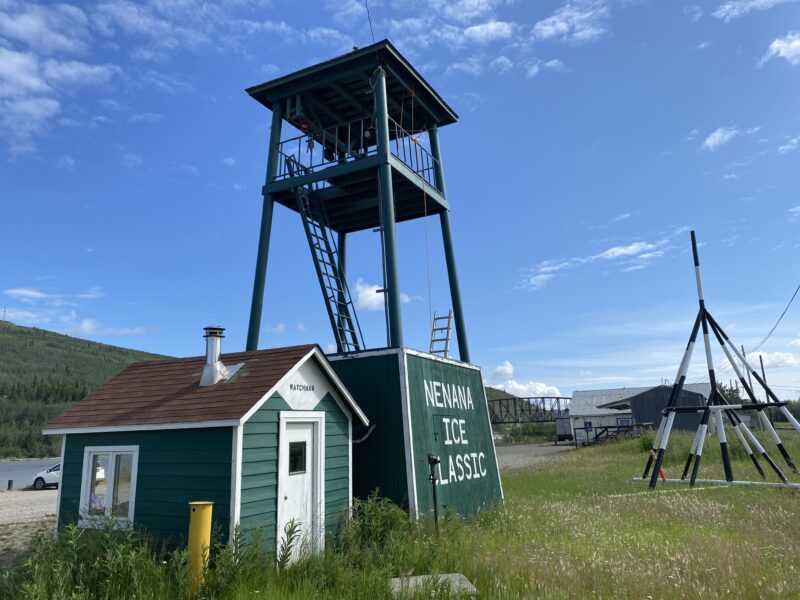
buying his book!! Nenana is also famous in Alaska for its ‘Nenana Classic’. This is a sweep stake on
when the river ice will melt that has been running since 1917. Literally thousands take part every
year and when a black and white structure which sits on the ice topples over, that is the exact
moment the ice has melted and the person with that time wins. I saw some of the huge books of
bets and it was incredible with people betting seconds apart.
Fairbanks was a town that felt big and busy to us after our weeks in remote countryside. In reality
it’s a sprawling town that’s not so big. We cycled around the shops getting stocked up for our
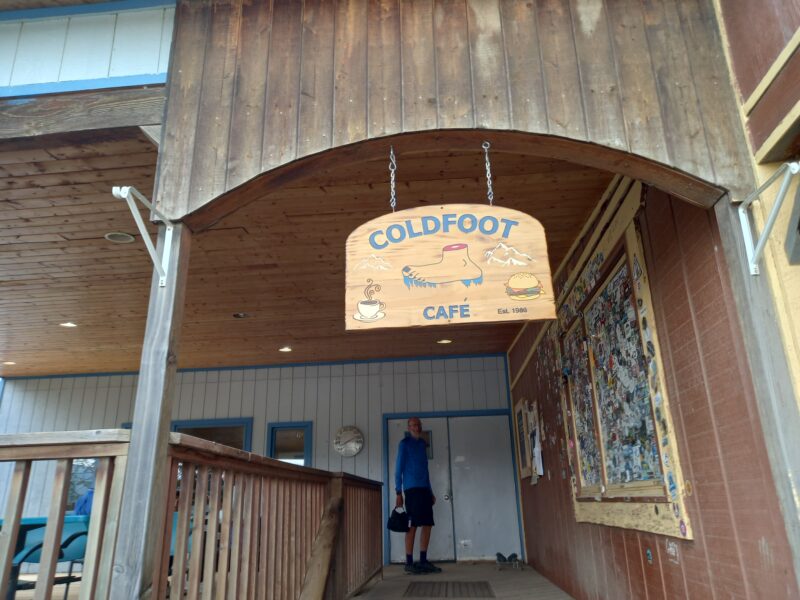
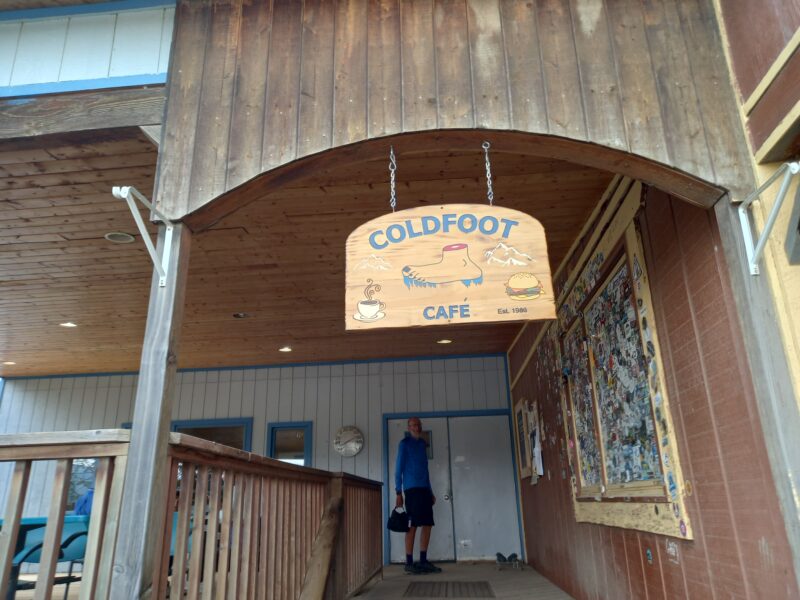
adventure on the Dalton Highway. We couldn’t carry the 12 days food needed on such a remote
road (only two truck stops along the whole 500 miles) so we had 6 days food flown on a small plane
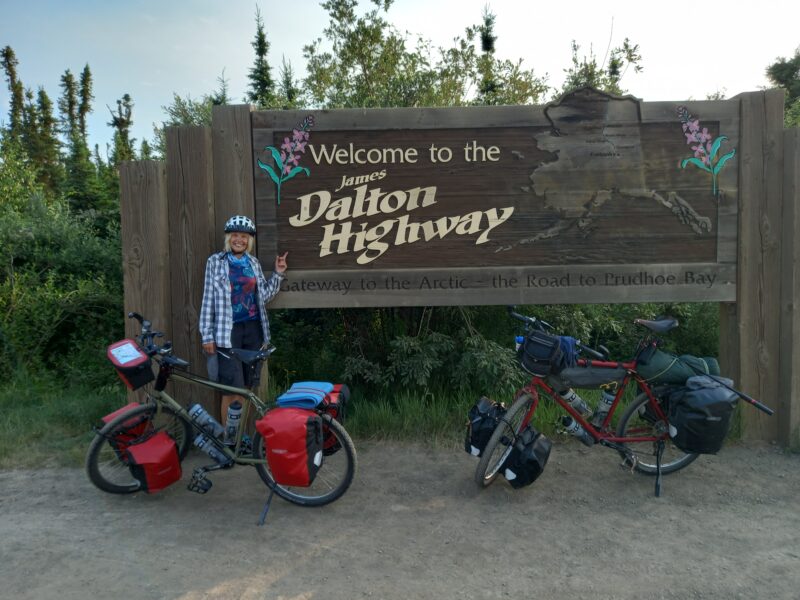
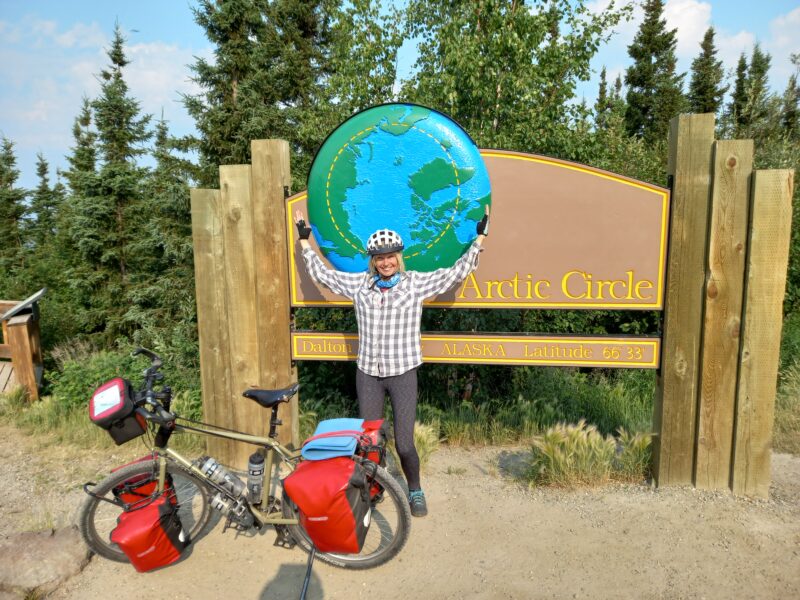
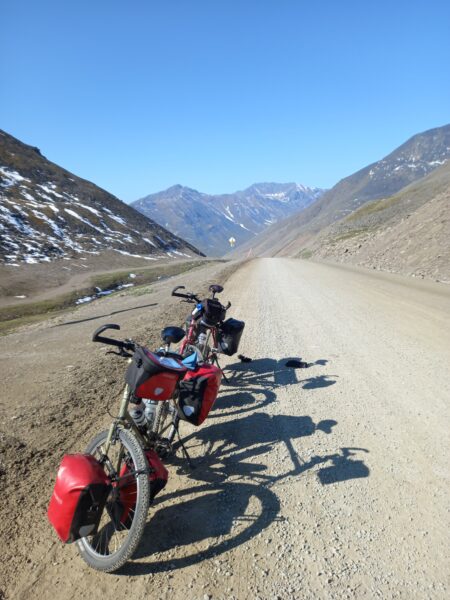
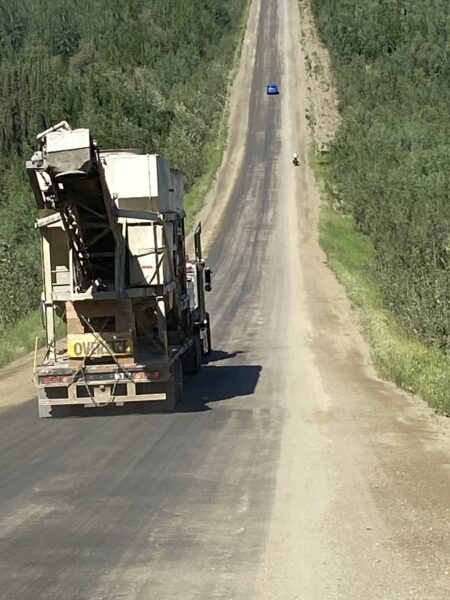
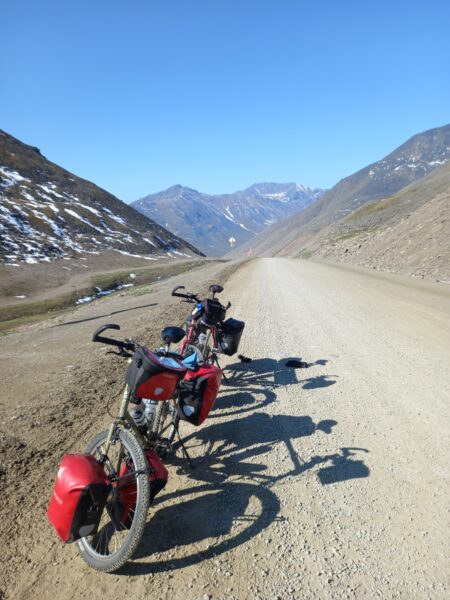
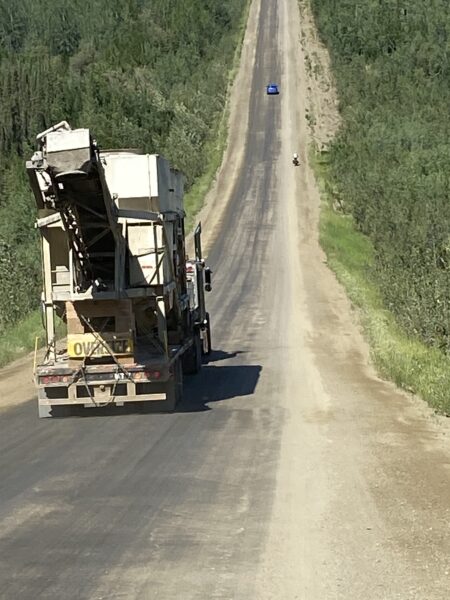
to Coldfoot – the truck stop about half way. The Dalton Highway is mainly gravel and has extremely
steep hills. There is no phone signal and it goes over the highest pass in Alaska – the Atigun Pass in
the Brookes Mountain Range. The road was built to support the oil fields on the Arctic Coast and
follows part of the 800 mile pipeline which transports oil from the far north to Valdez in the South all
year round.
During our ride, we met other cyclists who had, unfortunately given up. Some because of the cold,
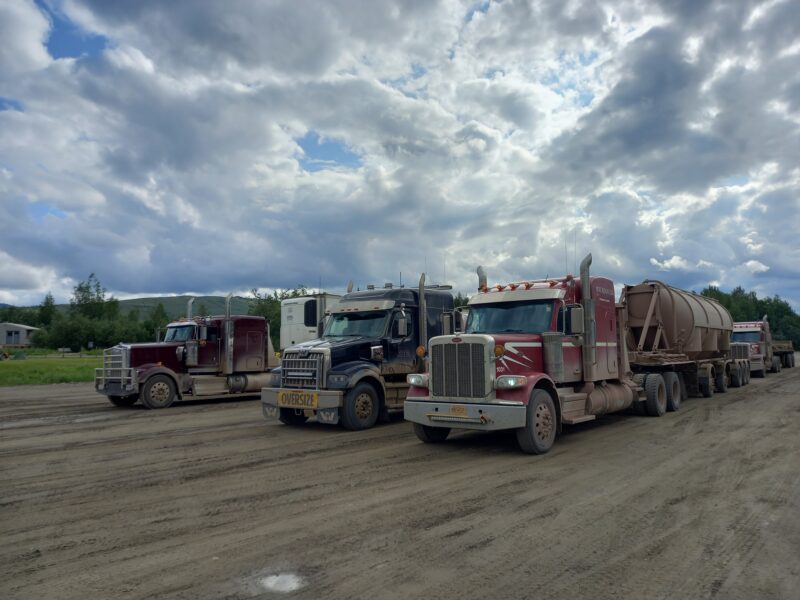
some the road surface and the continuous trucks kicking up rocks and dust and some because of the
steepness of the hills. I kept in my head the two girls we had met in Denali who had such confidence
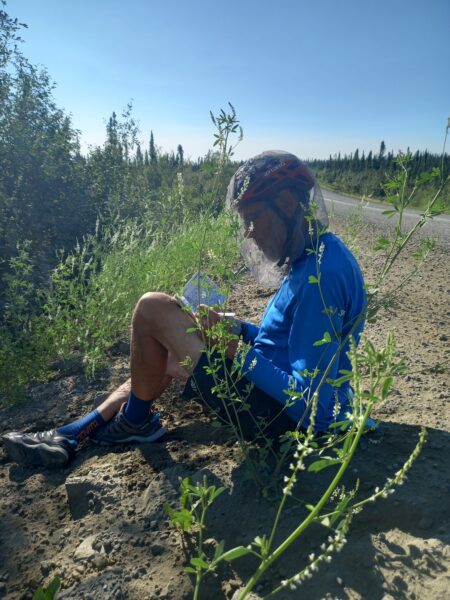
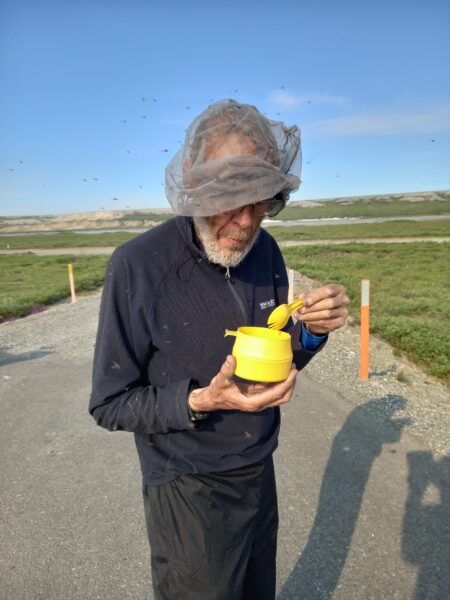
that I could succeed and that really helped. The mosquitos got really annoying, they were bigger
and faster than previous ones and we couldn’t out cycle them. The worst was climbing slowly up
very steep gravel with a head net on and hardly being able to see or breath because of the vast
numbers of mosquitos covering the net. We had a puncture on the Dalton which was fine except
for the mosquitos – they made everything so much more difficult. I kept forgetting to lift the net to
eat, pushing noodles into it!! As soon as I’d lift the net they would get down my clothing, into my
ears and cover my face – it was almost unbearable except for the scenery. Despite the mosquitos
we didn’t want to be anywhere else. It was such a beautiful, rugged wilderness that made us thank
the universe for being alive. I will never forget the Dalton and the rewards it gave us.
Then disaster struck. We were only 98 miles from the end and heating water to cook noodles when
a litre of boiling water spilt where I was sitting. Within seconds most of the skin from one side of my
bottom was gone and the rest was blistering. I went into shock and could only stand the pain whilst
pouring cold water over the burn. Tim quickly got me a sleep mat to lie on but I was covered in
mosquitos so we put the tent up so I could try and get away from them. I was in so much pain and
so frightened we’d run out of water. Tim reassured me as we’d filtered 3 litres just before the
accident happened. We thought I’d need to get a lift the rest of the way but I spent the whole night telling myself I could complete the Dalton Highway – it wasn’t going to get the better of me. I’ve
never wanted to complete anything so much in my life. The next morning I tentatively put clothes
on which immediately stuck to the burn. But I managed to cycle despite the road deteriorating
badly over the next 40 miles. There is no phone signal on the Dalton Highway and we would have to
wait until Deadhorse to get Wi-Fi and ask for advice. I just knew I had to try and stop it from
becoming infected.
We were rewarded on the way when a whole herd of Caribou crossed the road – there must have
been a few hundred of them and it was such a wonderful sight. One more night of wild camping and
the next day we made it to Deadhorse and Deadhorse lodge. We checked in and I went for a shower
– little did I know the pain of the water hitting the burn would be the worst pain yet. It was
unbearable but I had to keep it from getting infected. There was a tiny shop for the workers in town
and so we went to see if we could get anything to help (this was after the medical centre hadn’t
been able to help at all). They only sold alcohol pads for injecting diabetic needles and hemorrhoids
cream. The shop was set up for the truckers who sit all day every day!
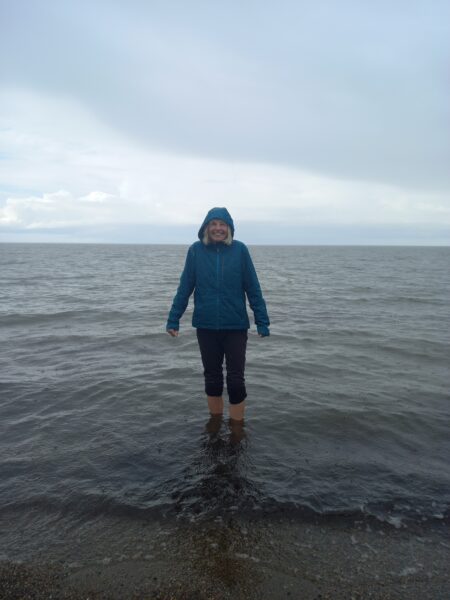
After paddling in the Arctic Ocean and seeing a Grizzly bear swim across a lake, it was time to get a
bus back to Fairbanks. The bus is a minibus and is 16 hours of bone rattling road returning from
where we’d just cycled. Two Italians were on the bus who had been on the same bus the day before
but when they saw just how difficult the Dalton Highway was, they turned right around and were
travelling back with us. To be fair they were very down about not giving it a go.
In Fairbanks I went to the medical centre when they cleaned and dressed the wound and said I’d
have a scar to be proud of – my Alaskan souvenir no one will see!! We spent a few night in the
hostel chatting to other travellers and took a trip on the Alaskan Railroad before heading back to
Seattle and home.
The whole trip had been 3091 miles long with an average of 50 miles per day. Our maximum miles
in a day was 84. We were on the road for 84 days and camped for 68 nights. The total climbing was
152,000ft with an average of 2500ft per day. The most we climbed in a day was 6000ft.
Thank you for reading.